Embedded / Case study
BatteryDisplay
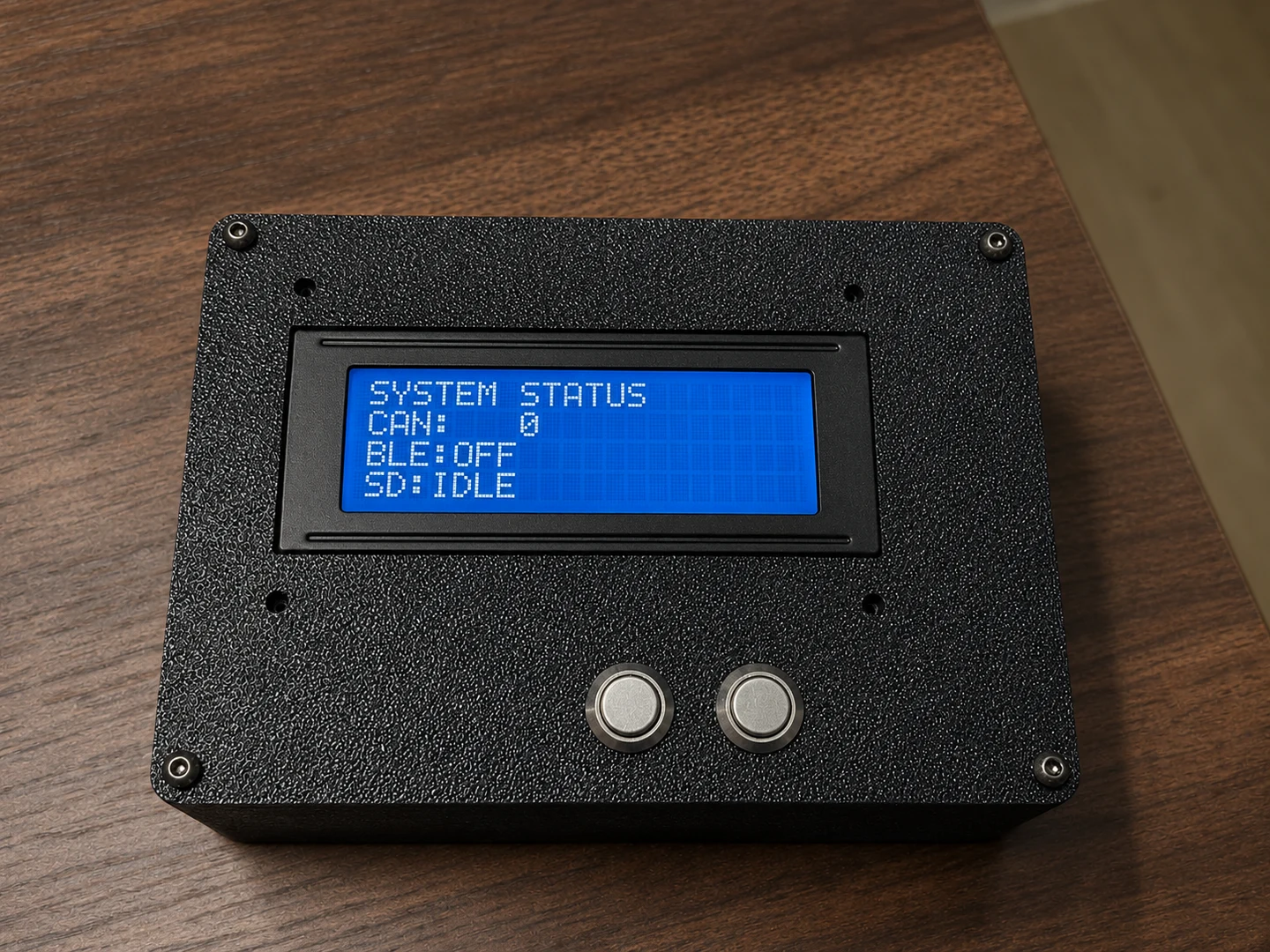
A connected monitoring prototype that captures battery data on a CAN bus and makes it available at the bench and in a browser.
01 / The brief
A clearer view of a battery test.
When a battery fault is hard to reproduce, the readings around it matter. BatteryDisplay captures selected CAN signals for a local display, a removable log, and remote monitoring in a browser.
For my engineering thesis, I designed the carrier PCB and enclosure, built the ESP32 firmware, and integrated the proxy, server, and diagnostic interfaces. I tested the complete chain on a bench with recorded and synthetic CAN traffic.
- CAN bus
- 250 kbit/s
- Catalogue
- 22 message definitions
- Local interface
- 20 × 4 LCD and microSD
02 / Architecture
From a CAN frame to a browser reading.
The ESP32 handles acquisition and local monitoring. The Raspberry Pi takes care of the network path.
How each stage works
-
CAN · 250 kbit/s
Battery CAN bus
Provides the incoming frames. A PCAN adapter replays recorded or synthetic traffic for bench tests.
-
ESP32 · BLE
BatteryDisplay
Receives and caches the latest frames, then exposes them and their message definitions over Bluetooth.
-
.NET · HTTP
Raspberry Pi proxy
Caches the definitions, polls for frames, decodes their signals, and publishes telemetry samples.
-
Flask · JSON API
Browser dashboard
Displays the latest decoded readings from a short buffer held in server memory.
From the ESP32 · Local
LCD and microSD
Selected readings appear on the 20 × 4 LCD and are logged to removable storage, independently of the proxy.
From the ESP32 · Direct BLE
Windows diagnostics
A .NET desktop client inspects known CAN identifiers, message definitions, and the latest raw frames.
03 / Bench demo
The complete chain in operation.
The assembled device sits beside the bench supply while the dashboard receives readings through the Raspberry Pi proxy.
Silent footage, 9 seconds. Playback starts on request.
04 / Hardware
Designed, printed, and assembled.
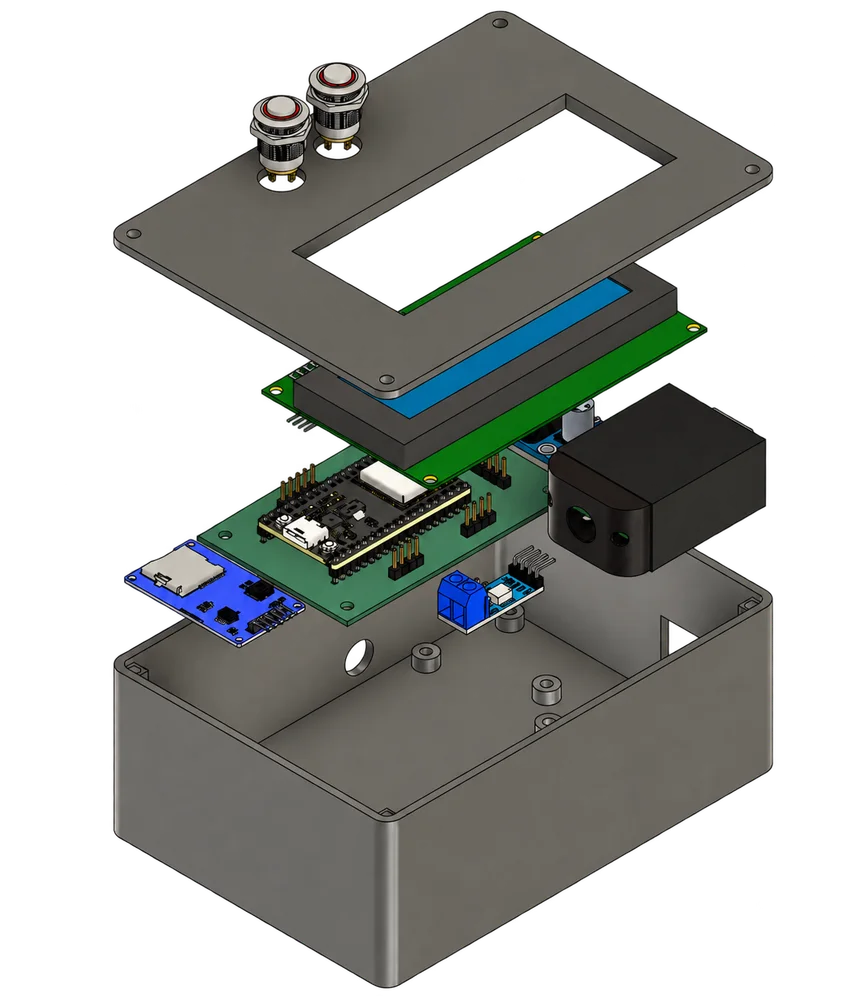
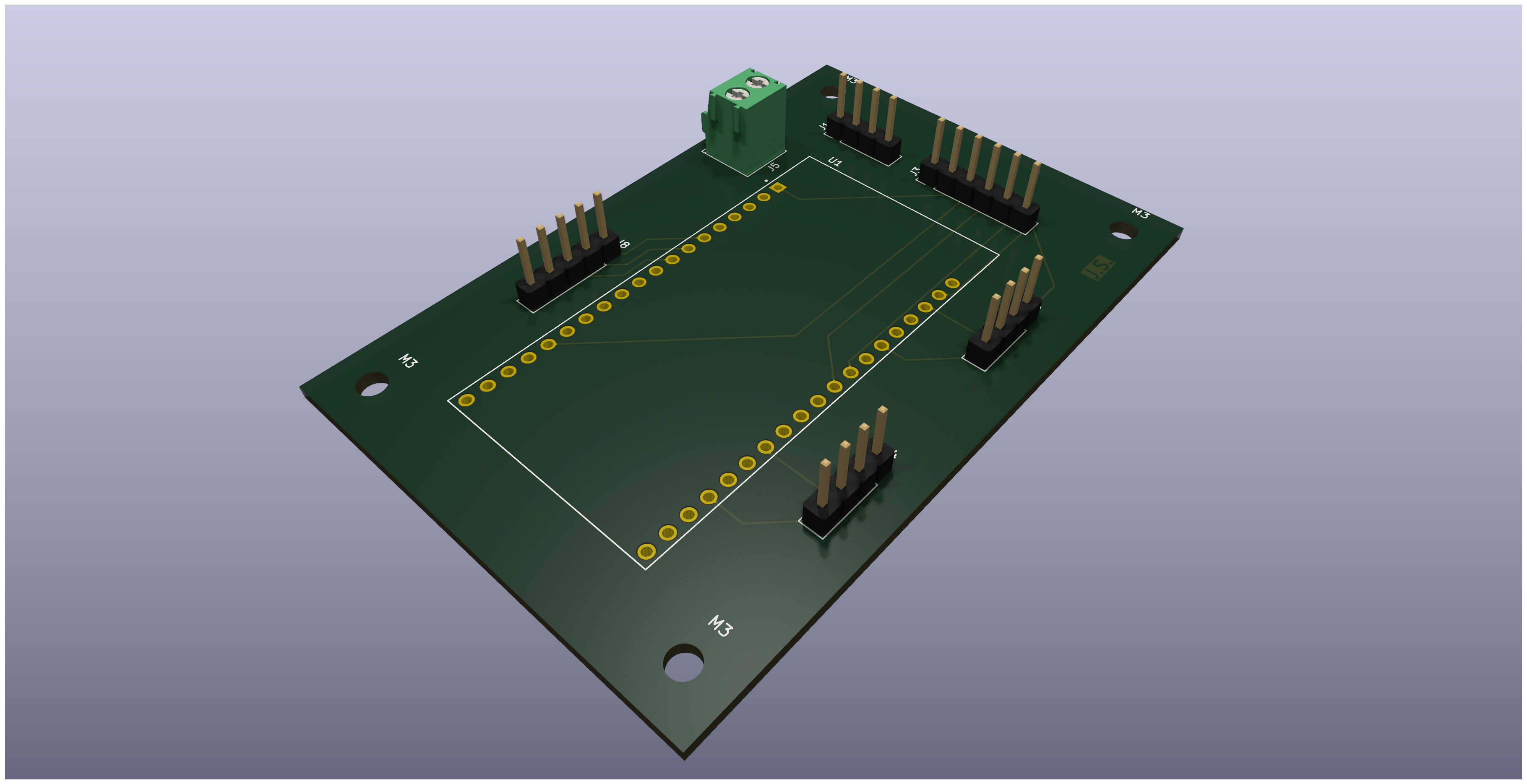
A carrier PCB connects the ESP32, CAN interface, display, buttons, and microSD inside a two-part, 3D-printed enclosure.
05 / Engineering decision
Rebuild the session after a power cycle.
The proxy caches message definitions for decoding. After a Bluetooth session failure, it reconnects and restores those definitions before polling resumes, picking up the device’s current catalogue.
One documented bench trial
I powered the device off and back on while leaving the proxy running. Its journal recorded these milestones after failure detection.
- BLE connection restored
- 12 s
- Definitions restored and polling resumed
- 89 s
- First successful HTTP publication observed
- 117 s
The proxy recovered without a service restart. This trial covered BLE recovery after a device power cycle. Network outages and sample retention during the interruption were outside its scope.